
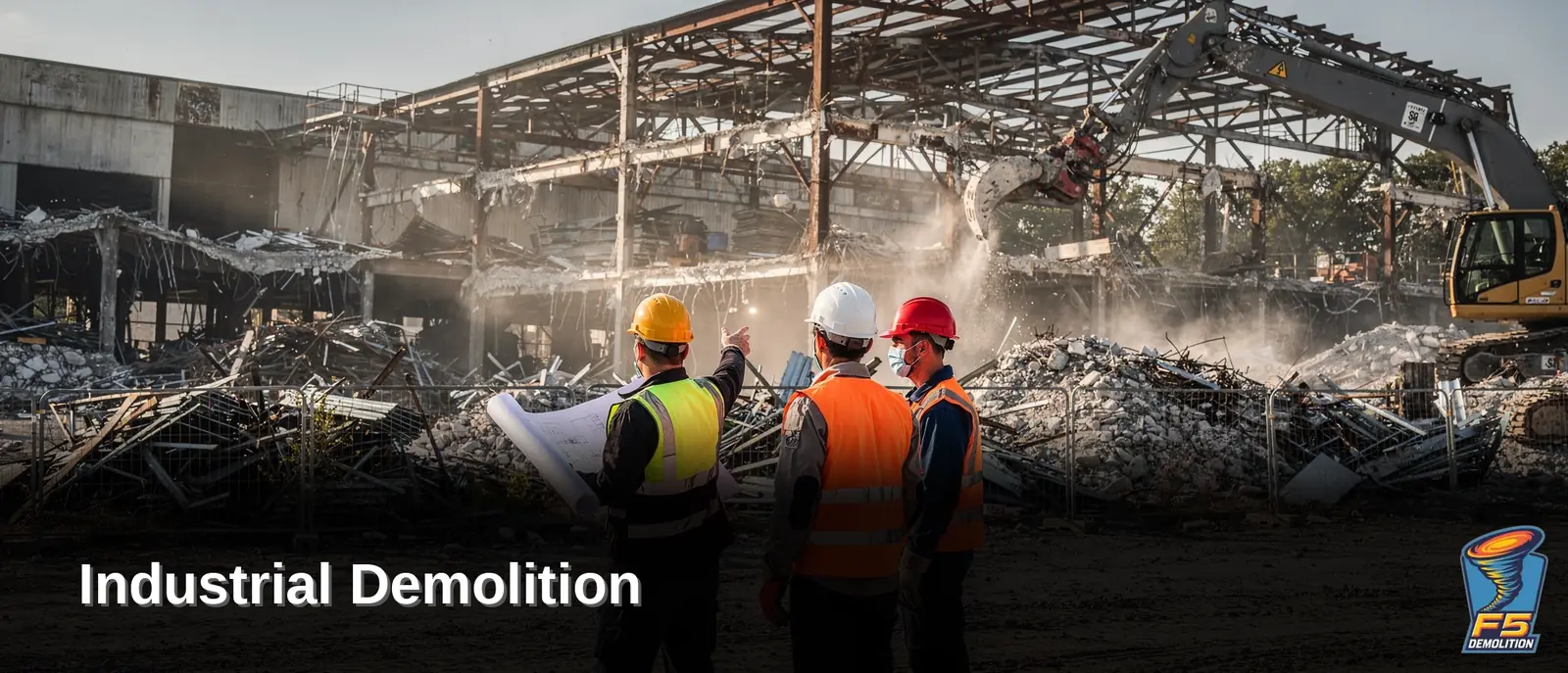
Industrial Demolition and Site Clearing Essentials
By F5 Demolition Editorial Team · Updated 2026-08-04
F5 Demolition, based in Yukon, OK, delivers specialized industrial demolition and site clearing services backed by a 10-employee team. The company handles structural teardown, debris removal, and land preparation for industrial and commercial properties, ensuring sites are cleared safely and efficiently for redevelopment or new construction projects.
Structural removal, debris management, and hazardous material abatement form the core of specialized industrial demolition. F5 Demolition, a 10-employee team based in Yukon, OK, delivers these services following the latest A10 safety standards, ensuring clean, stable sites ready for redevelopment.
Industrial demolition and site clearing guides cover Expert Techniques for Concrete Demolition & Removal, debris management, and The Ultimate Guide to Demolition Costs in Oklahoma City: House Tear Down, Pool R, including asbestos and lead paint remediation. Updated A10 safety standards, revised June 8, 2026, now govern structural removal risk protocols. Facility directors and civil engineers rely on licensed contractors like F5 Demolition to plan compliant, efficient site clearance for redevelopment or new construction.
Key Takeaways
- Demolition and site clearance serves as the essential first step for new construction and property redevelopment projects.
- The American Society of Safety Professionals updated five critical A10 standards on June 8, 2026.
- Proper site preparation transforms outdated properties into clean, stable, and safe building sites for development.
- F5 Demolition operates in Yukon, OK with 10 employees providing specialized industrial demolition services.
What makes industrial demolition different?
Industrial demolition differs fundamentally from standard building removal because of the complex hazards and infrastructure involved. Facilities like factories and processing plants contain hazardous materials, active utility connections, and heavy equipment that require specialized planning before any structure comes down. A single oversight in this phase creates cascading delays and safety risks that derail entire project timelines.
What hazardous materials require abatement in industrial demolition?
Industrial sites frequently contain asbestos insulation, lead-based paint coatings, and chemical residues from manufacturing processes. Proper hazardous material abatement removes these substances before structural work begins. This step protects workers and the surrounding environment from contamination. Skipping abatement leads to regulatory fines and months of remediation delays.
Why is utility disconnection critical for plant removal?
Plant removal requires disconnecting water, gas, electrical, and sewer lines before demolition equipment enters the site. Capping these utilities prevents explosions, electrocution, and flooding during structural collapse. F5 Demolition coordinates with utility providers to ensure every line is safely terminated. This preparation transforms a dangerous worksite into a controlled demolition zone.
F5 Demolition handles both full structure removal and selective demolition for industrial sites. The company brings precision and speed to every phase, from hazardous material abatement through final Understand Pool Removal Costs in OKC: Demolition vs. Fill-In. Clients receive a clean, stable foundation ready for redevelopment without hidden liabilities.
How does factory demolition prepare your site?
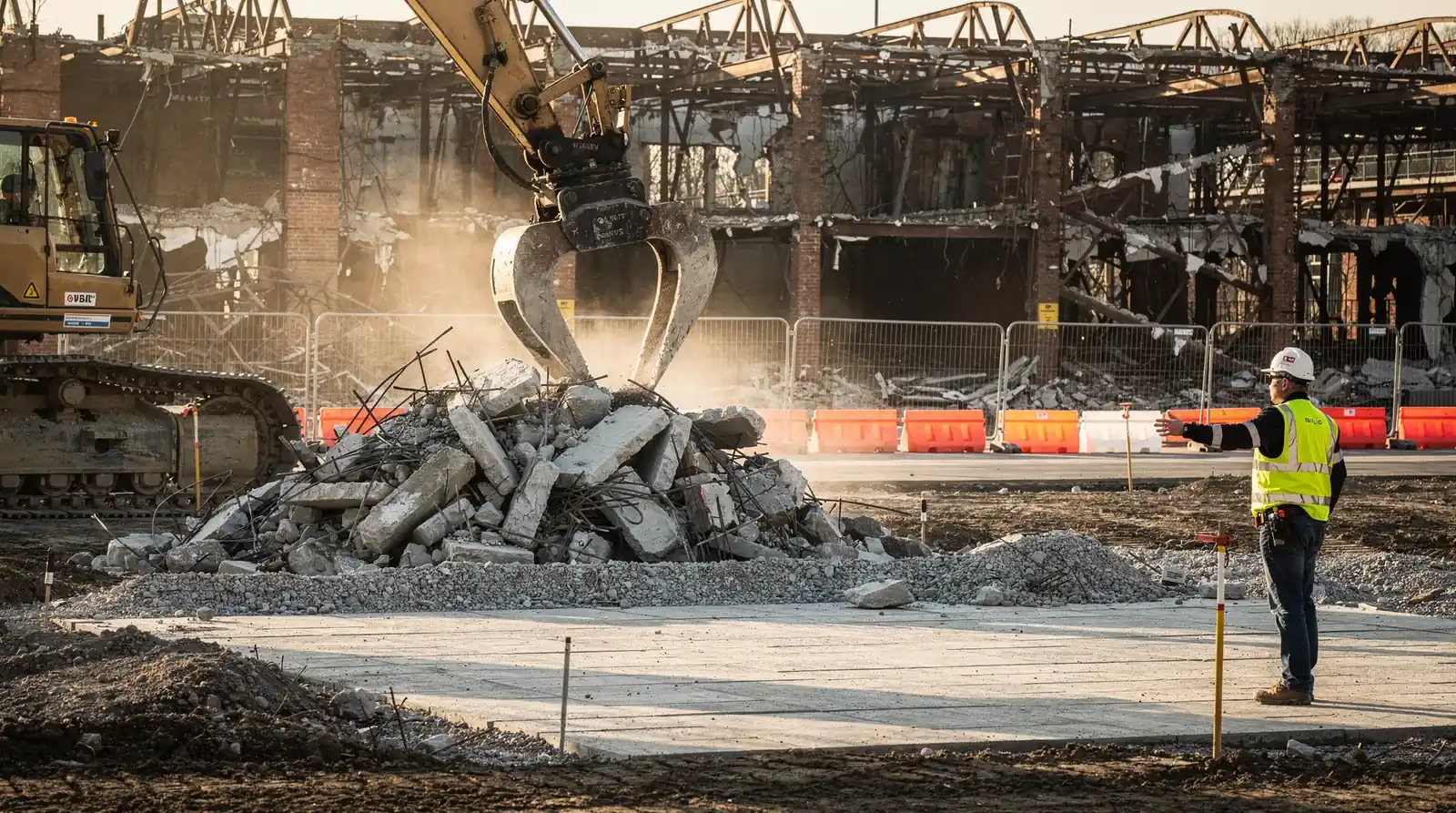
Factory demolition clears the physical structure, but the real work happens in the ground beneath. A complete plant removal process transforms a contaminated, cluttered industrial site into a clean, level canvas ready for new construction. Without this preparation, builders face unstable foundations, hidden debris, and costly delays that derail entire project timelines.
What happens to the debris after factory demolition?
Debris management turns mountains of rubble into an organized, haulable waste stream. The process involves three distinct steps:
- Sorting materials by type, separating concrete, metal, and hazardous components
- Hauling the sorted waste to appropriate disposal or recycling facilities
- Disposing of materials according to environmental regulations
Proper debris handling prevents buried waste from compromising future foundations. A site that looks clean on the surface can still hide structural problems below grade.
Why does site grading matter for new construction?
Site grading levels the ground after demolition, creating a stable, uniform surface for new foundations. Uneven terrain causes drainage problems, structural settling, and expensive corrective work during the building phase. Professional grading ensures the site meets engineering specifications before the first foundation pour.
F5 Demolition emphasizes safety and efficiency throughout this process, minimizing disruption to surrounding operations. The company’s approach keeps industrial demolition projects on schedule while maintaining a clean, secure work environment. For facility managers, this translates into predictable timelines and a site genuinely ready for its next chapter.
What steps ensure safe plant removal?
Safe plant removal follows a structured sequence that begins with structural removal and ends with site grading. The American Society of Safety Professionals updated five critical A10 standards on June 8, 2026, addressing modern risks in industrial demolition. These standards govern every phase of factory demolition, from initial assessment to final cleanup.
How does structural removal work in plant demolition?
Structural removal involves safely tearing down existing buildings during plant removal. F5 Demolition uses cutting-edge technology and a skilled team to execute this phase smoothly. The process requires precise planning to protect adjacent structures and maintain worker safety throughout the operation.
What happens to materials after demolition?
Waste recycling recovers materials like metal, concrete, and wood from demolition sites. This step transforms debris into valuable resources rather than sending everything to landfills. The recovery process includes:
- Sorting metals for smelting and reuse
- Crushing concrete for aggregate in new construction
- Processing wood for biomass energy or mulch
F5 Demolition, located in Yukon, OK, with 10 employees serving industrial clients, manages these material streams efficiently. The company coordinates utility disconnection, hazardous material abatement, and site grading as part of the complete plant removal package. Each step builds on the previous one, creating a safety chain that protects workers, the environment, and the project timeline.
FAQ
What services does F5 Demolition provide for industrial demolition projects?
F5 Demolition, based in Yukon, OK, handles full structure removal, selective demolition, hazardous material abatement, and site grading, delivering a clean, stable foundation ready for redevelopment.

Facts
- F5 Demolition is located in Yukon, OK, US.
- F5 Demolition has 10 employees.